
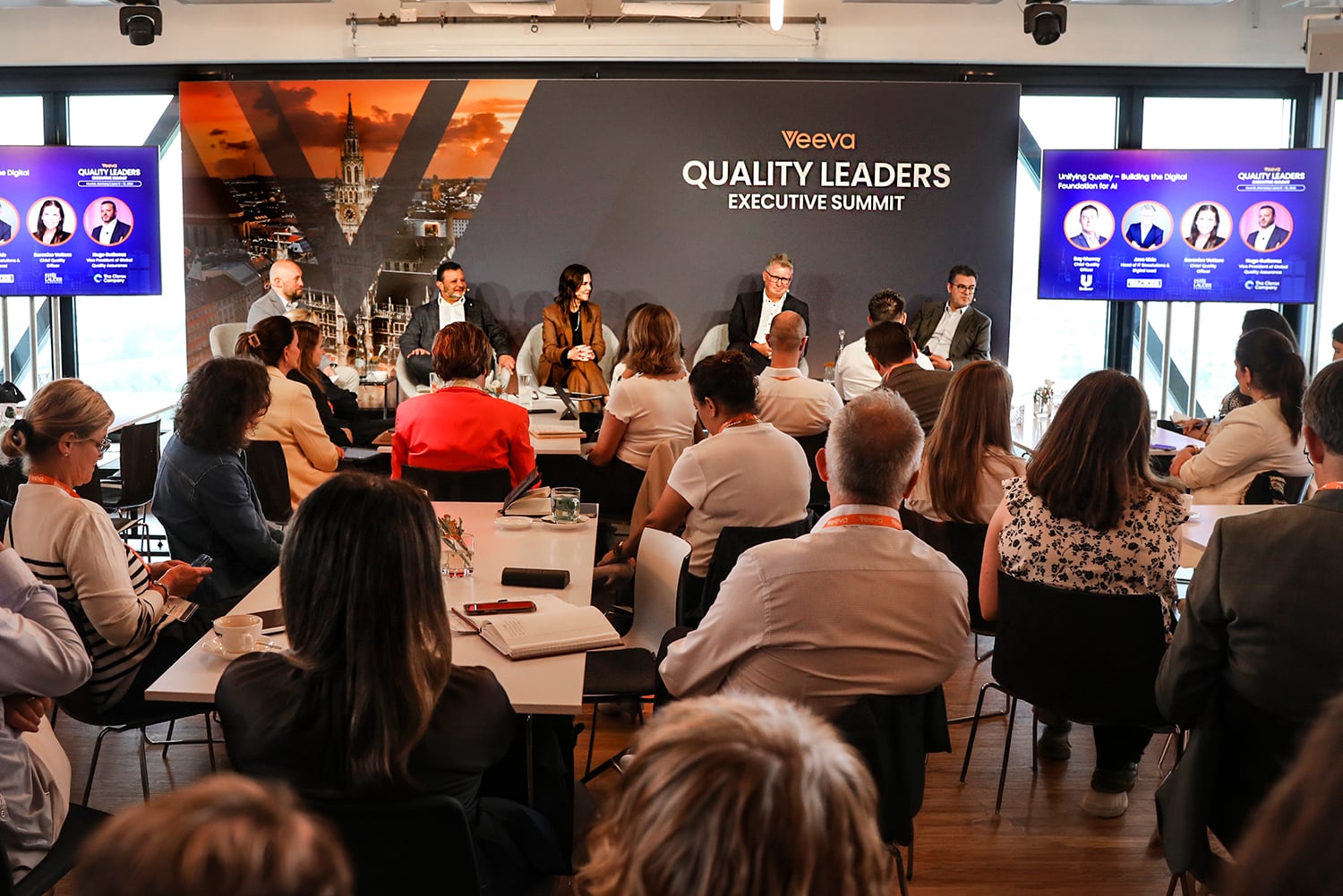
Over 100 executives joined the 2026 Quality Leaders Executive Summit for two days of networking, interactive masterclasses, and best practice sharing. Here’s what we learned.
At the 2026 Quality Leaders Executive Summit in Munich, Veeva welcomed over 100 leaders from quality teams across the food and beverage, beauty and personal care, home care, specialty chemicals and ingredients, packaging, consumer electronics, and toy industries.
Conversations centered around the evolving nature of quality leadership across two days of networking, interactive masterclasses, and best practice sharing.
The key takeaway was that quality leadership of the future touches the entire organization, not just the quality department. Maximizing the business value of quality requires a shift in corporate culture, underpinned by cross-functional collaboration, top-down support, and modern digital applications, including AI.
The role of quality is evolving
We explored how leaders are redefining the role of quality across the modern regulated enterprise, shifting from functional oversight to strategic leadership.
Leading organizations are rethinking how quality drives performance, resilience, and competitive advantage through interaction with other teams. Aldo Caceres, chief quality officer at Kenvue, brought this evolution to life by explaining how his team had shifted from a "mindset of control” to a “mindset of ownership”.
Rather than acting as "referees" with a reputation of policing compliance and blocking innovation, Aldo encourages quality leaders and their teams to act as "goalkeepers": protective but active members of the wider business team. Moving from a pure compliance focus towards open-ended problem-solving and risk-based experimentation allows quality to act as a business enabler working closely with other departments.
"We decided to focus on outcomes, not processes.
You can't unlock the speed of innovation if your workflows are disconnected. You can't standardize globally across siloed systems and ways of working. And you cannot predict when your data is fragmented.
That's why we focused on building the digital foundation for quality.”
– Aldo Caceres, Chief Quality Officer, Kenvue
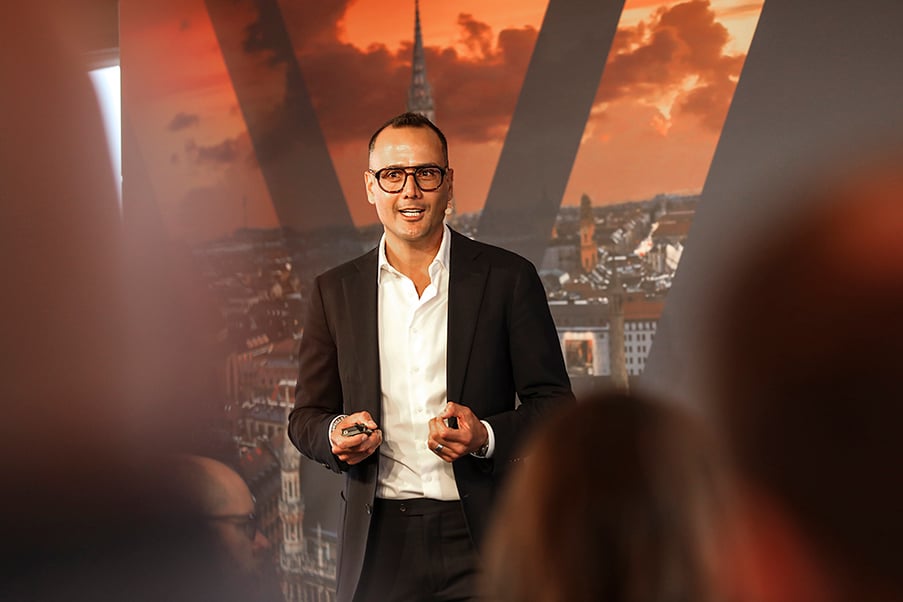
Aldo Caceres describes his organization’s “mindset shift,” which repositioned quality from a control and compliance function to a driver of business performance
Other insights emerged in a panel session discussing the changing mandate of the chief quality officer, and its shift from “guardian of compliance” to “strategic business partner”. Olivier Mignot, VP of global quality at Nestlé, noted that only 5% of surveyed food quality leaders report directly to their CEO, making top-down support of quality teams difficult. For Zoltan Syposs, senior VP of quality and food safety at Danone, aligning quality work with the language of the business is essential to start breaking this barrier down.
“Translate your technical and regulatory language into how quality impacts speed, margin, risk, cost, and culture. If I have these five words in the boardroom, I can win.”
– Zoltan Syposs, Senior Vice President, Quality & Food Safety, Danone
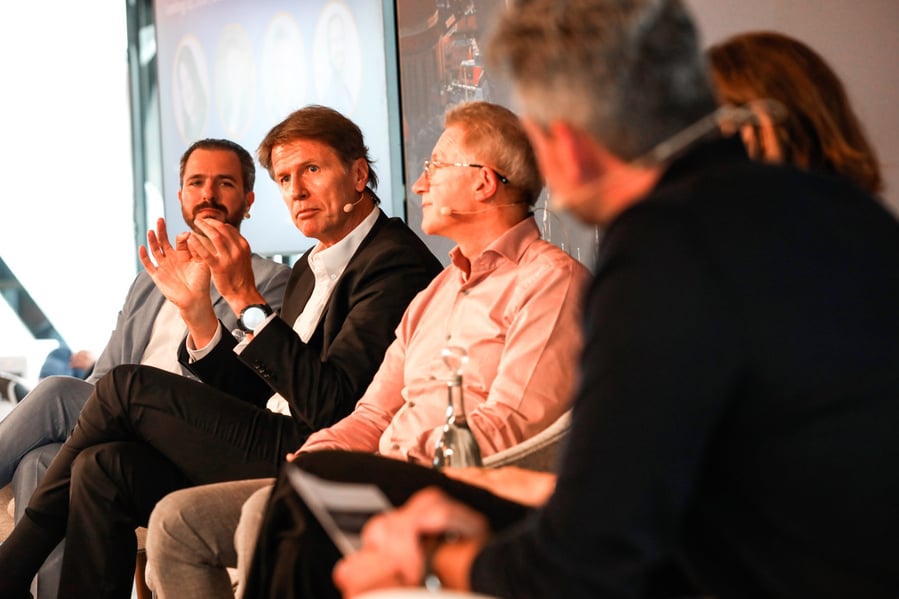
Zoltan Syposs and the panel discuss how quality leaders can more effectively collaborate with the wider business
Agentic AI is beginning to transform quality work
Understanding how to integrate AI safely into the quality management system remains a top priority for quality leaders. I shared the agentic capabilities we’re introducing into Vault AI, and how they will increase the speed and efficiency of quality processes for Veeva QualityOne customers.
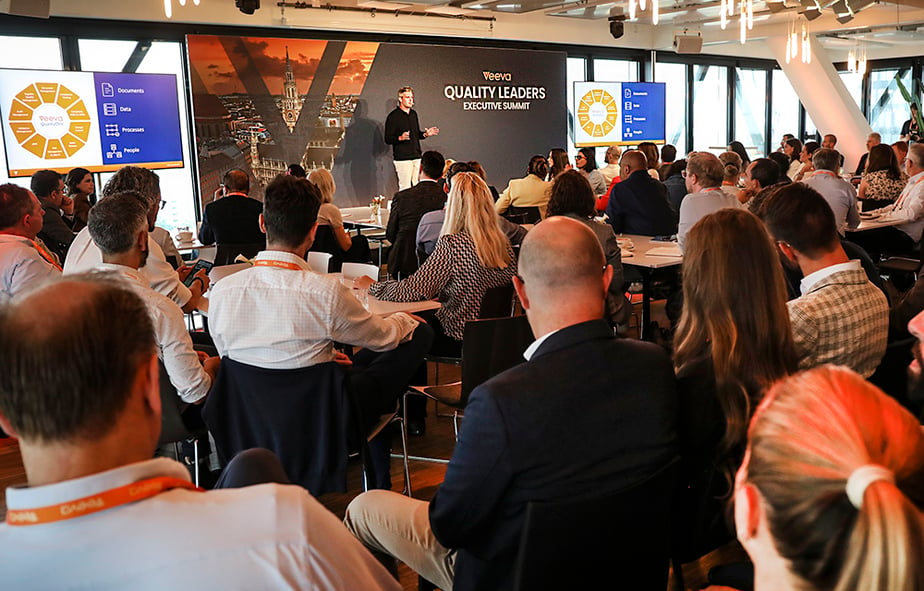
Sharing Vault AI’s agentic capabilities
Laying the foundation for agentic quality applications like Vault AI was a recurring topic at the Summit. Alongside the digital building blocks of workflows, content, and data, a panel discussed the “human side of quality transformation,” and the critical interpersonal role that quality leaders have to play in guiding their organizations towards technological innovation.
Quality executives are increasingly acting as strategic “translators,” partnering with IT teams to bridge technical capabilities with business goals. To lead effectively, it was recognized that leaders need to invest in their own digital and AI education, and to build a supportive culture of psychological safety among their teams that encourages innovation.
Mars’ Vice President of Corporate Quality Silvia Pereira made an important point about the unique position of quality leaders to guide and oversee digital experimentation and AI adoption:
“There is a paradigm that because you are in quality, you can't innovate, test, or try things. But we're the ones that can do it better than most, because we know about risk management.”
– Silvia Pereira, Vice President of Corporate Quality, Mars
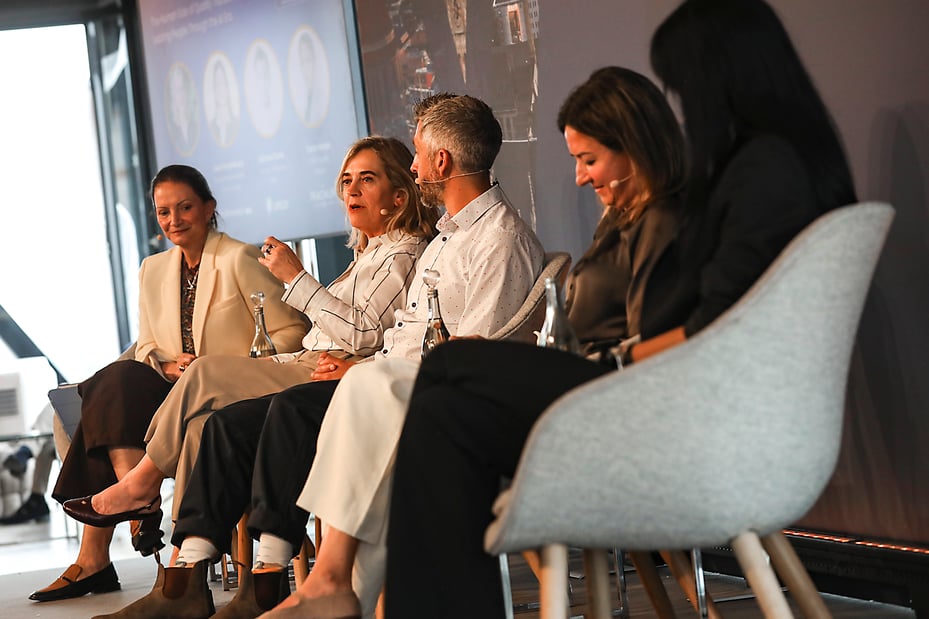
Silvia Pereira and the panel discuss how quality leaders can guide their teams into the AI era
How quality leaders are making measurable impact
Several industry leaders shared how quality improvement projects brought tangible benefits for their organizations:
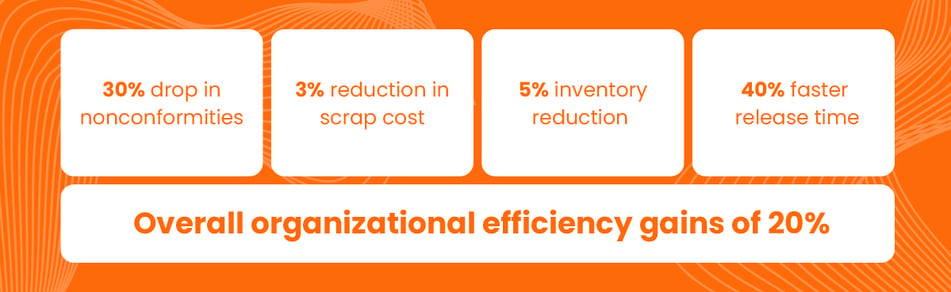
Kenvue’s adoption of QualityOne involved simplifying and automating 10 global processes, training thousands of users, and migrating over 174,000 documents. The company’s digital transformation project has brought:
The Clorox Company’s Vice President of Global Quality Assurance, Hugo Gutierrez, built an innovative “self-sufficiency” agreement with his COO, where half of any financial savings from process improvements driven by quality are invested back into the quality department.
By targeting an area of the business with high volumes of product returns, Hugo’s team was able to collaborate with the logistics team to cut returns by 50% — securing extra funding for further quality improvement.
Kraft Heinz’s global head of FSQ digital and automation, Radosław Baran, discussed his organization’s implementation of QualityOne in a quality leadership masterclass session.
Centralizing workflows, content, and data in QualityOne allowed Kraft Heinz to harmonize and automate over 40 processes, replacing over 10 disparate legacy systems. Supply chain quality losses are 10% lower, while 5% additional free cash flow has been unlocked from inventory.
Learning from industry leaders
This year’s Executive Summit reminded us that the next era of quality leadership is cross-functional and technologically driven. By redefining the mandate of the quality department, partnering with other areas of the business, and proactively equipping their teams with the digital fluency needed to navigate the AI era, quality leaders are transforming a traditional compliance cost center into a long-term driver of value and competitive advantage.