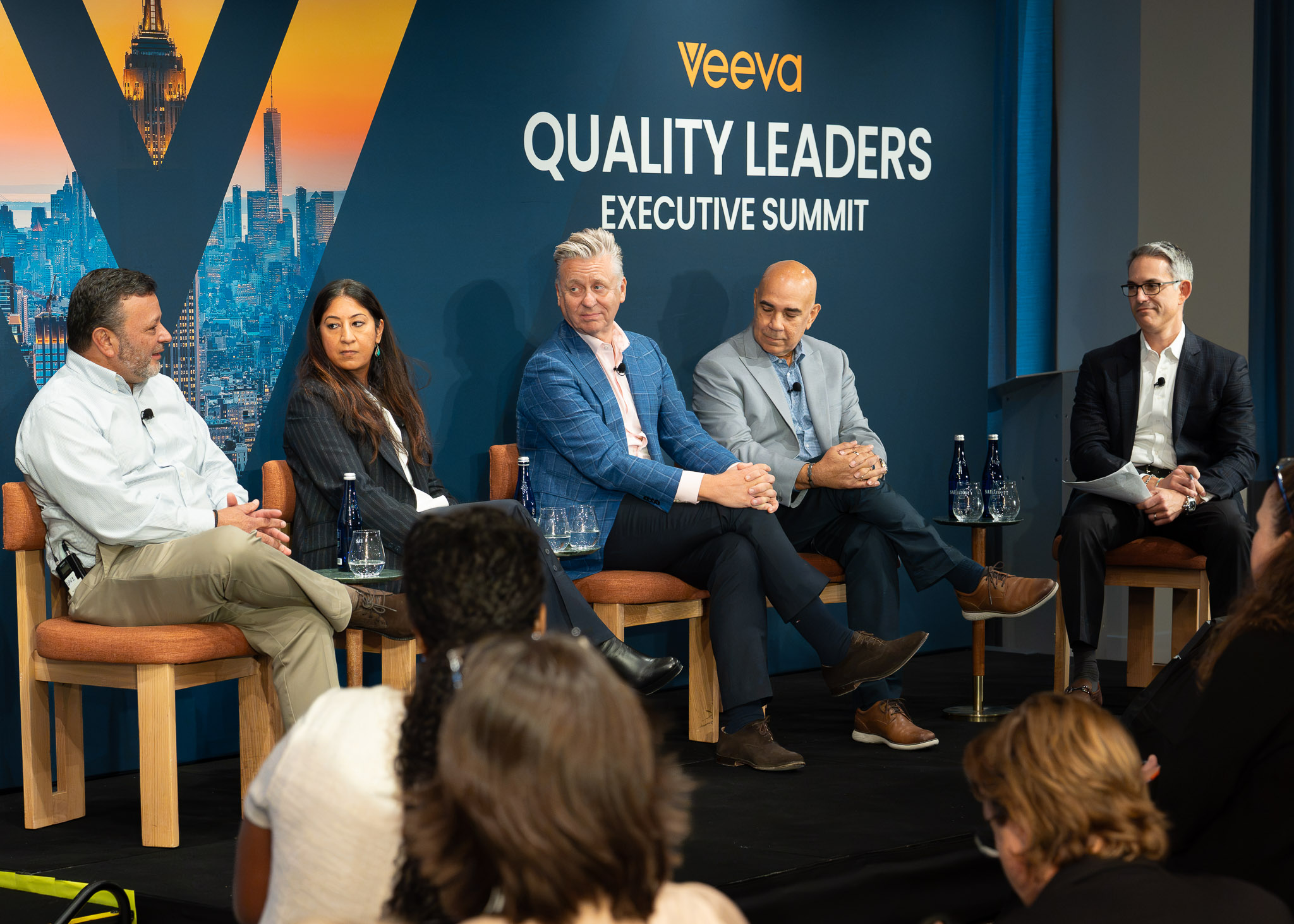
At a recent gathering of quality and food safety leaders from top global organizations, expert panels discussed a range of topics from the evolving role of the chief quality officer to laying the foundations for predictive, AI-powered quality.
A central theme emerged from quality leaders’ insights: the transition to a digitized, AI-enabled quality era requires not just new technology, but a fundamental shift in the quality operating model and a reinvention of the quality role.
Redefining the quality function as a value creator
The role of the quality team is changing from its historic perception as a protective, compliance-driven function and a cost center. Quality leaders are evolving their purviews to act as strategic, growth-enabling business partners.
Gilberto Quintero, chief quality officer of Kimberly-Clark, stresses that modern quality leaders must move beyond traditional compliance and safety focus to concentrate on business-wide “value creation,” which includes reducing the cost of poor quality, building brand equity, and accelerating go-to-market processes.
Speaking the language of the business is a core element of this shift. For Kam Jaghra, vice president of global quality at Beiersdorf, the annual quality business plan should lead with proposed impact on topline growth and margin protection, honing in on specific data points like defect rate reduction and cycle time improvement to bring the value of the quality function to life.
Cross-functional partnership is also key. During a panel discussion of the evolving mandate of the chief quality officer, speakers agreed that close “alliances” with CFOs and R&D and marketing teams help to ensure alignment with business objectives and support multi-year funding initiatives. Direct reporting to the CEO should be secured wherever possible to maximize the influence of quality leadership and emphasize quality’s position as a value-adding business engine.
"We still have to do the traditional things as quality leaders: safety, quality, regulatory compliance. But the biggest shift that's happening is towards value creation. How are you going to add value to the corporation?"
– Gilberto Quintero, Chief Quality Officer, Kimberly-Clark
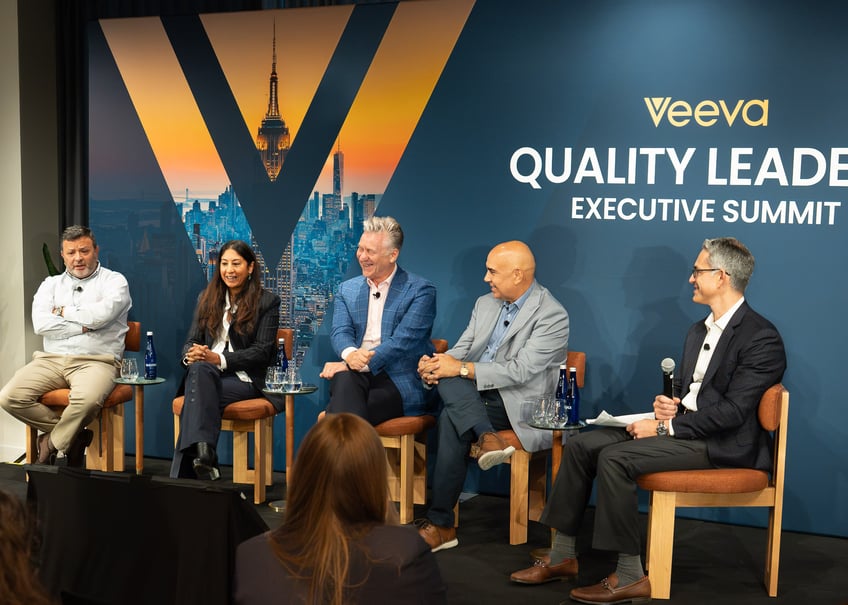
A quality leadership panel discusses the evolving role of the chief quality officer
Moving from reactive to proactive
Quality teams have long relied on lagging indicators, like complaints and defect data, to identify and react to issues. Berenice Vettore, global chief quality officer of Estée Lauder, believes the role of quality leadership is shifting away from simply responding to data, towards a more predictive, proactive approach.
For Berenice, the key to this predictive quality is the consolidation of disparate quality data and systems into a clean, structured, and centralized source of truth. Transitioning to real-time integrated data across the enterprise enables quality leaders to identify risks early, spot trends, and target more proactive quality initiatives at the right areas.
Integrated quality software solutions, built for scalability and flexibility by industry-specific vendors, are therefore becoming essential tools for organizations looking to embed a stronger quality strategy.
Berenice and the Estée Lauder team adopted this approach themselves, consolidating 7 legacy systems into a single Veeva QualityOne ecosystem housing 21 million data records and 40,000 documents, with over 4,000 global users.
Estée Lauder now benefits from unified, simplified, and standardized processes and data. A single global platform has consolidated quality activities from document and risk management to CAPAs, complaints, supplier qualification, and change control.
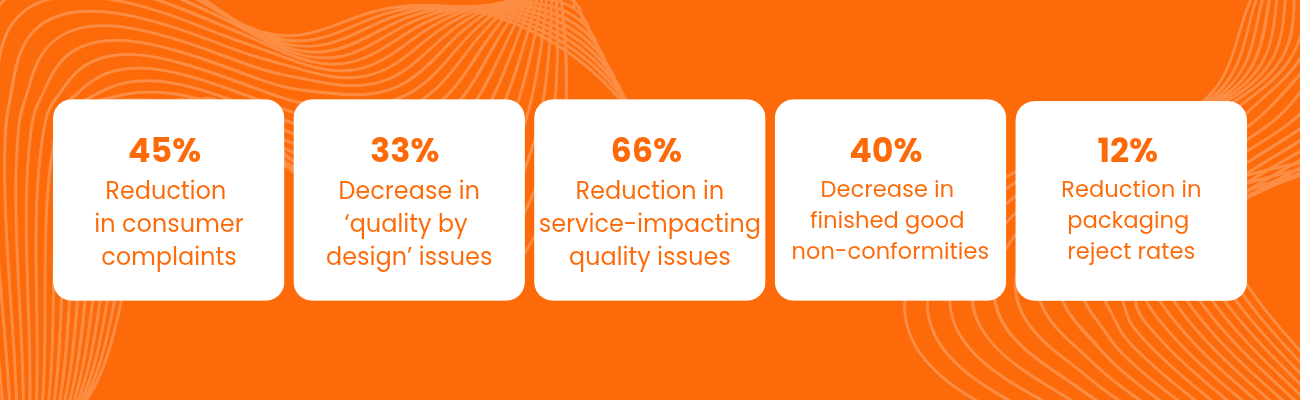
The results from the QualityOne partnership are clear and measurable:
But this model of quality consolidation isn’t only valuable in itself. For Berenice, it’s a key step towards the next stage of AI-driven quality, with centralized data enabling capabilities like predictive, business-wide agentic insights and mass data analysis.
“We have to know how to ask the right questions. Historically, it was, “what happened?” Now, we need to think, “what is happening?”
And the next question is, “what is going to happen, based on our data?””
– Berenice Vettore, Global Chief Quality Officer, Estée Lauder
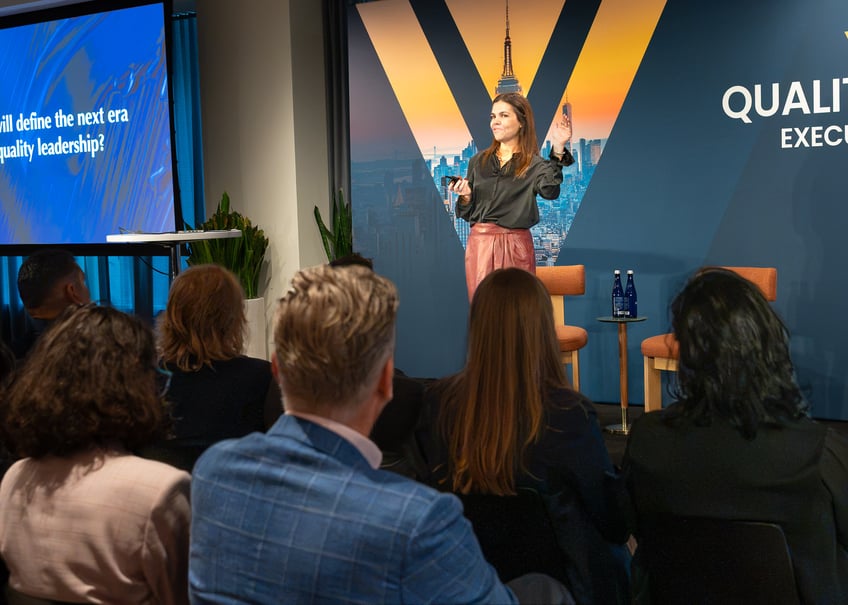
Berenice Vettore describes Estée Lauder’s shift to a proactive quality model
Laying the AI foundations carefully
AI is already helping quality teams transform their work. Leaders shared practical use cases where AI is making an impact, including:
- Reducing supplier audit time from days to minutes
- Automating the compilation of complex annual product reviews
- Assisting in root cause analysis and SOP updates
- Analyzing consumer feedback and social media sentiment to guide product innovation
QualityOne’s head of strategy David Maher also presented on Vault AI, detailing how agentic functionality within Vault Platform maximizes the speed and efficiency of core quality tasks like complaint intake, triage, and disposition. Agentic quality workflows, deployed across centralized datasets in platforms like Veeva QualityOne, are helping regulated organizations move towards the more proactive, automated quality models recommended by leaders like Berenice.
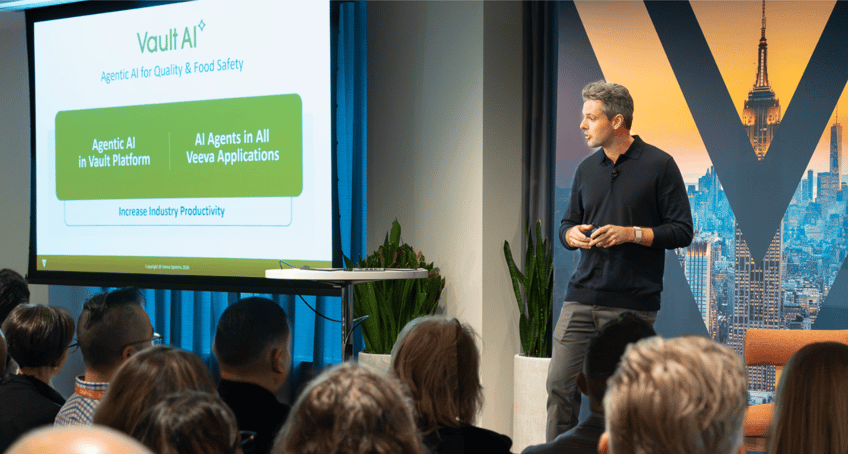
Sharing how Vault AI’s agentic AI functionality transforms processes for quality teams
But while AI offers new opportunities for quality teams, the successful leaders of the future have a responsibility to drive thoughtful and coordinated adoption projects.
Panelists agreed that successful digital transformations require:
- Clearly understanding and articulating the business value of new capabilities to secure funding
- Establishing clear data ownership and governance processes
- Pinpointing the most widespread and onerous manual tasks to eliminate, freeing time to act on AI insights
Quality leaders are recognizing that their risk-based focus, and the large amounts of data owned by quality teams, makes them natural candidates to lead digital transformation projects. Quality teams have a responsibility to lead responsible AI innovation by overseeing pilot projects, establishing clear governance, and consolidating data in scalable, futureproof platforms to drive sharper commercial and strategic decision-making.
The human and cultural elements of AI adoption are also top priorities for quality leaders, and the sharpening of leadership skills surfaced multiple times as an ingredient for success.
Panelists outlined key “soft” skills that leaders should cultivate during the shift to AI, including intellectual curiosity to challenge legacy processes and find improvement opportunities, and critical thinking to properly evaluate AI-generated insights and avoid blind trust.
Several panelists, including Derek Henderson, VP of quality at Kenvue, recommend building internal “AI squads,” cross-functional focus groups, to align on high-impact use cases and maximize the benefits of AI transformation.
Pierre Decrion, VP of quality and food safety at Lactalis USA, recommends bringing AI experts directly into the quality team, “demystifying” AI by ensuring adoption isn’t driven solely by IT.
And Thalya Hairston, VP of quality at Coca-Cola Consolidated, emphasizes consistent and transparent top-down communication from quality leaders who are willing to educate themselves about AI and lead by example.
“We as quality leaders have to move as fast as, or faster than, the business. We have to think differently and fundamentally change how we work.
AI and technology, targeted at the right problems, will allow us to do that.”
— Derek Henderson, Vice President of Quality, Kenvue
The quality leader of the future
Quality leaders are redefining their roles, broadening their skill sets, and transforming the department’s perception by other areas of the business. By aligning quality with C-suite initiatives, adopting more proactive operating models, and spearheading digital transformation and AI adoption, quality leaders can maximize — and demonstrate — the unique value they provide to their organizations.
Watch the Summit highlight videos to hear more insights from quality leaders.